
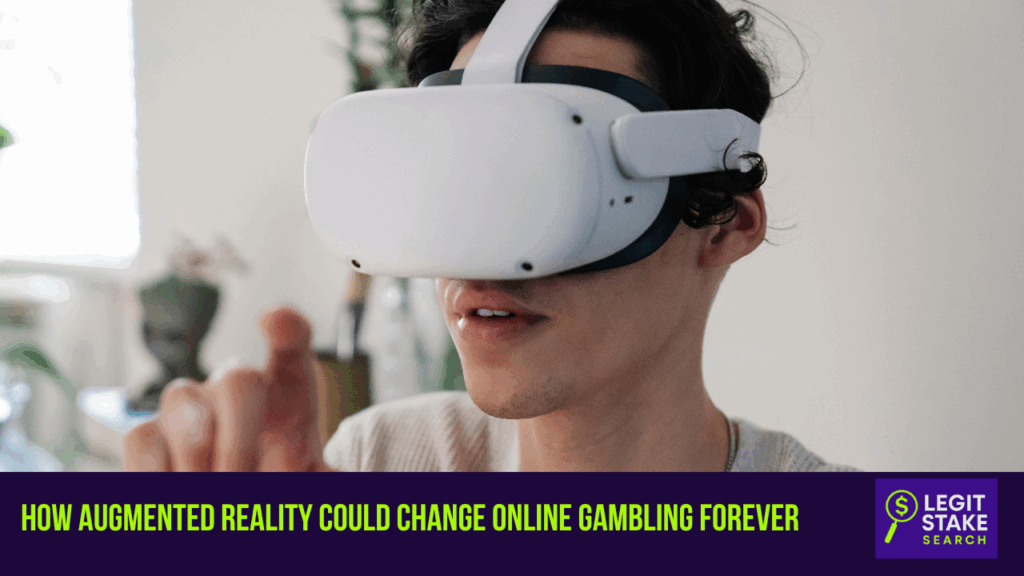
Imagine you walk into your living room, raise your phone, and see a blackjack table floating in front of your sofa. The dealer deals cards that seem to hover in midair. That’s the promise of augmented reality (AR) for online gambling. It layers casino features into your world rather than removing it.
AR is already creeping into gaming, and online casinos will be among the first to adopt it in full. The blend of real and digital makes everything more immersive. You don’t just push buttons on a screen—you interact with elements that feel like they exist in your space. That shift can change how much you play, how deeply you engage, and how fast you realize value in your bets.
Why AR Is More Than Just a Gimmick
The biggest draw of AR is that it changes passive play into active experience. Think of slot machines: in AR, reels might spring out into your space, symbols spin in 3D, bonus rounds appear on your coffee table. That makes gameplay feel more visceral, which often leads people to stay longer and wager more. More play means more chances to win—and if you play smart, more room for profit.
Live dealer games could benefit even more. Picture sitting at your dining table while a dealer appears as a hologram, shuffling cards, dealing hands. That kind of presence narrows the gap between online and land-based casinos. You feel like you’re there. That weight of realism makes decisions feel heavier, which can push you to stay sharper—something good players exploit.
Developers are already experimenting. One AR poker tool overlays gameplay onto your real table using your phone camera. Users say it speeds up play and makes interaction more intuitive. That proves AR can add real advantage, not just flashy visuals.
What AR Needs Before It Blows Up
This transformation won’t happen overnight. Hardware has to catch up. Phones are powerful, but AR demands rendering, movement tracking, spatial mapping. We’ll see real progress once lightweight AR glasses or ultra-efficient chips are widespread.
Network speed is critical. AR content is heavy. Any lag or glitch fractures the illusion. With 5G and better networks, seamless AR experiences become possible and frustration drops.
Content design also matters. You can’t just slap a slot over your carpet. The visuals must adapt to your space, respond to motion, avoid glitches. That costs time and money. Some smaller operators may hold off until they see returns.
Regulation has to play smart. AR overlays in your real space bring questions of privacy, fairness, and responsible design. Operators will need safeguards—how to block overlays in inappropriate spaces, how to prevent excessive pushy promos, how to enforce age gates.
Finally, users must accept it. Some will try AR and dismiss it as gimmick. It has to prove its worth—not just look cool. If early versions feel clunky or superficial, many will stick with the screens that already work.
What AR Could Unlock for Smart Gamblers
If AR becomes mainstream, those who adapt first can benefit. Longer sessions will likely follow—they’ll feel more immersive, more compelling. More time in the game gives you more chances to apply your edge.
Casinos will push AR-specific promos—offers tied to space, behavior, or timing. Maybe walking toward a window triggers a bonus. The more targeted those offers, the more selectively you can take advantage.
Early adopters will get perks. During the rollout phase, AR platforms may reward users with better odds, testing bonuses, VIP treatment. If you opt in early, you capture value others don’t even see yet.
You could mix modes. Start in classic mode to protect your bankroll, then switch to AR when you see favorable promos or features. That mix gives flexibility and control, letting you ride the upside without overcommitting.
What Could Go Wrong
AR might pull players deeper into risk. If the game feels too real, it’s easier to lose track of time or money. Immersion can weaken emotional brakes.
Promos will get intense. Operators might push overlays triggering bets in your space. That’s powerful but also risky—bordering on manipulation if not handled ethically.
Technical failures will hurt trust. Imagine misaligned overlays, lag in dealing cards, glitches disrupting the illusion. Once trust is broken, players might bail on AR entirely.
Also, not everyone has AR-ready devices. If AR becomes core, players without compatible tech could get weaker offers or feel excluded.
Where AR Will Likely Land First
Live dealer games seem natural for AR overlays. Blackjack, poker, baccarat—all games that already emphasize visuals and interaction will translate well.
AR poker tools will likely expand. They’ve shown promise in enhancing pace and interaction. That could make poker more dynamic.
Then promos and gamified overlays. Casinos might let you wander in your space and unlock credits or mini-games in virtual layers. That integration will bridge real life and gambling more tightly.
Eventually AR will tie to physical locations. Walk into a bar and see a roulette wheel projected. Bet from your phone. The bets will layer over your reality. That kind of merging will make online gambling feel even more connected to daily life.
FAQ: AR in Online Gambling
What is augmented reality in gambling?
It’s a technology that layers virtual elements—tables, chips, cards—over your real environment. You see both your surroundings and the game together.
When will AR gambling really take off?
In a few years. It depends on device adoption, network infrastructure, content quality, and regulation. But prototypes are already appearing.
Will AR make gambling more profitable for players?
Potentially. With deeper engagement, smarter offers, and early-user perks, there’s room for advantage if you stay alert.
Are AR gambling tools available now?
Yes, in limited form. AR poker tools exist that overlay gameplay onto tables via phone cameras.
What’s the biggest risk of AR gambling?
The biggest risk is losing control. The more real it feels, the easier it is to overspend or overstay. You’ll need stronger discipline to harness AR’s power responsibly.